
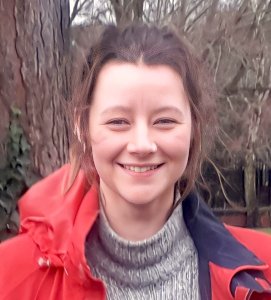
Spotlight on…
Laura Brain, Research Associate, Cardiff University
What’s your current role at your organisation?
I’m a Research Associate in Architectural Design at the Welsh School of Architecture (Cardiff University), working full time on the Transforming Homes (TH) Project. I’m particularly involved in developing a ‘catalogue’ of scalable and transferrable design solutions for interwar social housing; the co-design activities that underpin the TH approach; and the transformation of the live demonstration homes in Swansea.
Which past experiences have helped you the most in your current role?
My background in community climate action taught me a lot about communicating design and retrofit ideas to different audiences, from householders to local authority teams. Designing and delivering training and workshops in past roles has also fed into the co-design work on this project, and coming from outside academia means I can bring an industry perspective on making research land with non-academic audiences.
I’ve also worked across quite a few other roles and sectors, including hands-on work with bio-based materials – practical experience that’s proved invaluable, since it’s much easier to design something when you can picture how it’ll actually be built.
One standout experience was the SPAB scholarship in 2023, a nine-month travelling scholarship that gave me real insight into conservation practice. Much of what I learnt applies directly to the project: from valuing repair and maintenance of existing building fabric, to celebrating the history and heritage of these homes.
What excites you about the research in the Transforming Homes project?
I love that the project aims to go “beyond retrofit” toward changes that improve both performance and liveability. Having worked in the retrofit industry before, I’ve seen its shortcomings firsthand, and this project has real potential to address them. I’m also excited to promote bio-based materials in retrofit; they’ve long been used in conservation, and it’s time our social housing heritage was valued the same way.
The interwar social housing typology itself is fascinating: the UK’s first large-scale social housing campaign, a design-led movement intended to bring about radical societal change by vastly improving the living conditions of working people. Transforming Homes is a chance to showcase these homes as a success story of architectural design — and for us as researchers to contribute to that history.
How is your expertise contributing to the Transforming Homes project?
Beyond my design skills, my varied industry background gives me insight into the conflicting perspectives that shape housing transformation decisions. I’ve been in the shoes of many project stakeholders — retrofit designers, contractors, community organisations, even a tenant living through retrofit. Balancing these different priorities feels critical to the project’s success.
That same experience shapes how I approach the TH resources too, whether it’s the catalogue, co-design tools, or the demonstration homes. Translating different parties’ perspectives into design solutions is a fascinating challenge, and understanding what each group actually needs helps ensure the resources we produce aren’t just theoretically sound, but genuinely useful and able to make a real difference to people’s lives.